
Two decades ago, Saadiyat Island was little more than a stretch of undeveloped coastline off Abu Dhabi. Today, the same island has become one of the UAE's most coveted luxury addresses, where residents can spend the morning walking along white-sand beaches, the afternoon inside a world-class museum, and the evening between waterfront restaurants and private beach clubs. Multimillion-dollar villas now sit alongside a growing cultural district anchored by institutions like the Louvre Abu Dhabi.
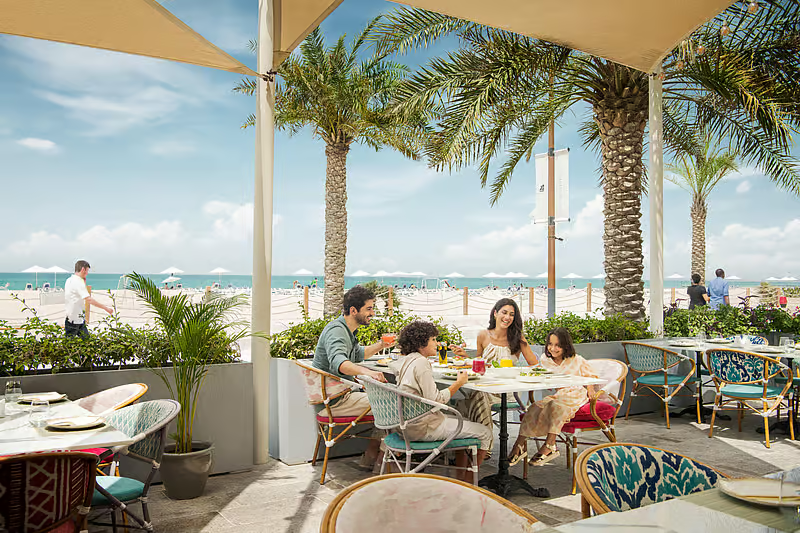
For years, luxury real estate in the UAE has almost always been synonymous with Dubai. The Palm Jumeirah, Downtown Dubai, and the city's skyline became shorthand for Gulf ambition and ultra-luxury living. But while Dubai built its reputation on scale and spectacle, Abu Dhabi has been quietly developing a different kind of luxury story. Saadiyat Island's appeal has never been about trying to recreate the Palm per se. Instead, it has been built around a different lifestyle: private beachfront homes, protected coastline, and a slower pace that puts residents close to the city. For buyers, the draw is not just owning a luxury property but having a place that feels removed from the noise yet connected to everything Abu Dhabi and Dubai are becoming.
The Numbers Tell the Story
That momentum is showing up in the data. Abu Dhabi recorded around 7,129 residential transactions in the first half of 2026. Saadiyat stood out within that market, with residential sales on the island surpassing Dh200 million during the reporting period, representing a 108 per cent increase compared with the same period last year .
The island has also maintained its position at the top end of Abu Dhabi's villa market. In the first half of 2026, average villa prices on Saadiyat reached approximately Dh26,500 per square metre, up 8 per cent year over year . While growth has moderated from the 28 per cent annual increase recorded previously, Saadiyat remains Abu Dhabi's most expensive villa market and continues to command a clear premium over other locations.
Apartment values on Saadiyat have performed even more strongly. Average transaction prices for apartments reached approximately Dh43,100 per square metre, a year-on-year increase of around 21 per cent . This reflects the sustained demand for prime waterfront living that the island offers.
What Makes Saadiyat Different
Saadiyat's rise is not being driven by one single factor. Industry experts say the island's appeal comes from a combination of lifestyle, location, and scarcity.
"The cultural district and the growth of its restaurant and leisure offerings have strengthened that position over time," said Clare Moukabaa, partner of residential consultancy Knight Frank MENA .
Once the island had established homes, beach resorts, a golf club and beach clubs, it began to feel like a complete luxury destination rather than somewhere that was still emerging. Saadiyat offers the increasingly rare opportunity to own a prime waterfront home within a lower-density community.
The Branded Residences Boom
Perhaps the biggest shift in Saadiyat's luxury story has been the rise of branded residences. Baccarat Residences is currently the most expensive luxury residential project in Abu Dhabi, reaching Dh99,000 per square metre . Four Seasons Private Residences on Saadiyat Beach ranked second at Dh84,000 per square metre, followed by Nobu Residences at Dh76,000 and Mandarin Oriental Residences at Dh73,000 .
The Four Seasons Private Residences, comprising 116 units including ultra-luxury villas, beachfront mansions, suites and penthouses, achieved record pricing benchmarks surpassing Dh14,000 per square foot, with total sales exceeding Dh4 billion since its launch less than a year ago . The majority of residences have already been sold.
For many buyers, these branded addresses offer more than just a home — they offer a lifestyle. Nobu Residences, for example, has pushed Saadiyat further into the ultra-luxury segment, with apartments starting around Dh8 million and penthouses reaching more than Dh137 million. Baccarat Residences and Louvre Abu Dhabi Residences are built around the idea that luxury today is increasingly tied to experiences: design, hospitality, culture, and access .
The Next Chapter: Marsa Al Saadiyat
Saadiyat's transformation is far from complete. The final phase of the island's masterplan was unveiled in July 2026: Marsa Al Saadiyat, a Dh100 billion development that will be home to over 58,000 residents .
The development spans eight kilometres of coastline and will include private mansions, luxury hillside villas, branded residences and waterfront apartments. At its centre will be Abu Dhabi's largest marina, with more than 350 berths able to accommodate everything from sailing boats to superyachts, lined with waterfront restaurants .
A scenic walkway will link Marsa Al Saadiyat directly to Saadiyat Cultural District, which is home to the Louvre Abu Dhabi, the Zayed National Museum, and the upcoming Guggenheim Abu Dhabi . The development will also include a one-kilometre promenade of retail and dining, a yacht club, two luxury hotels and a theatre district anchored by Dar al Funoon, a 6,000-capacity performing arts venue .
Buyer Profiles Are Changing
Saadiyat's transformation is also changing who is buying in Abu Dhabi. While earlier demand was largely driven by local residents and investors, real estate experts say the island is increasingly attracting international high-net-worth buyers who see Abu Dhabi as more than a place to park capital.
The buyer profile has become younger and more international, with entrepreneurs and business owners from Europe and Asia increasingly purchasing homes in Abu Dhabi. Many are relocating to establish businesses or take advantage of the emirate's growing financial sector, particularly around the Abu Dhabi Global Market .
Interestingly, despite the fact that Abu Dhabi and Dubai have been seen as competing destinations for high-net-worth buyers, more people are beginning to view them as complementary, with each city offering something different. "Go to Saadiyat, and you'll actually see a lot of Dubai plates," said Ali Ishaq, director and head of residential at Savills Abu Dhabi. "People from Dubai leave on the weekend and come to Abu Dhabi for that Saadiyat lifestyle" .
Why Saadiyat's Premium Is Likely to Hold
The demand for real estate in Saadiyat has continued against the backdrop of wider regional uncertainty. When the war between the US and Iran began earlier this year, many expected some impact on buyer sentiment, but the market proved more resilient than anticipated .
That resilience was also reflected in the lack of distressed sales after the slowdown. While some buyers expected to find opportunities from owners needing to sell quickly, that never materialised.
Looking ahead, Saadiyat's story is no longer about convincing buyers that the island has potential. "That already exists today on Saadiyat. I think as time goes on, it will only get better," Ishaq said .
While more residential inventory is now planned — Saadiyat currently accounts for 14 per cent of the emirate's planned residential supply pipeline, behind Yas Island and Reem Island — the island continues to command the highest values across Abu Dhabi's villa market . The challenge for developers is expansion without diluting what made the island desirable: privacy, space, and a sense of exclusivity.
 Watch AD


